If you want a neighborhood where you can walk to dinner, catch a show, spend time by the river, and still get home without a long drive, downtown Grand Rapids deserves a closer look. At the same time, city living here comes with real tradeoffs, especially around parking, winter routines, and the fact that some everyday errands may still take you outside the core. This guide will help you understand what daily life in downtown Grand Rapids actually feels like, who it tends to fit best, and what to expect before you make a move. Let’s dive in.
What daily life feels like downtown
Downtown Grand Rapids functions as more than a business district. It is actively managed as an urban neighborhood, with support for sidewalk cleaning, landscaping, beautification, sidewalk snowmelt, marketing, and special events through downtown place-management efforts and the Downtown Improvement District. For you as a resident, that often means a more polished and active street environment than you may find in lower-density areas.
That said, walkability here is strong but not perfect. City planning documents describe downtown as highly walkable and centered on pedestrian activity, while also noting that safety, connectivity, and network gaps still need improvement. In plain terms, you can do a lot on foot, but you should not expect every trip to feel seamless.
Winter plays a big role in the day-to-day experience. The city says residents have 24 hours after snowfall ends to clear sidewalks, and it also runs a sidewalk snow-support program that covers more than 200 miles of sidewalks in designated areas. If you are considering downtown living, it helps to think about winter mobility just as much as summer convenience.
Getting around downtown Grand Rapids
Can you live with less car use?
For many residents, the answer is yes. As of May 4, 2026, the city launched a one-year DASH pilot route with free buses arriving every 8 minutes, and The Rapid’s Silver Line also loops through downtown with weekday and weekend service. That setup can make a car-light lifestyle more realistic for commuting, entertainment, and routine trips.
Downtown is also home to major transit connections. Rapid Central Station is located at 250 Cesar E. Chavez Avenue SW, and Vernon J. Ehlers Station for Amtrak is at 440 Century Avenue SW. That gives you access to both local bus service and intercity rail from the urban core.
Mobile GR adds more flexibility with support for scooters, bikes, shuttle service, and DART CarShare. DART CarShare offers electric vehicles for $5 per hour, with insurance, maintenance, and roadside assistance included. If you do not want the cost of full-time car ownership, those options can help fill the gap.
What if you still drive?
Downtown still works for drivers too. The city says downtown ramps and lots operate 24/7, and some include EV charging plus courtesy jump-start, lockout, and flat-tire help. So while downtown supports a car-light routine, it does not force you into one.
The bigger question is how you prefer to move through daily life. If you are comfortable mixing walking, transit, biking, and occasional driving, downtown becomes much easier to enjoy. If you rely on a car for nearly every errand, the urban setup may feel less convenient than a more suburban pattern.
Parks and riverfront access
One of downtown Grand Rapids’ biggest lifestyle advantages is its access to public outdoor space. Ah-Nab-Awen Park sits along the Grand River behind the Gerald R. Ford Presidential Museum and includes restrooms, a picnic shelter, a built-in stage, a walking path, access to Gillett Bridge, and public parking. It gives downtown residents an easy way to step outside without leaving the city center.
Rosa Parks Circle adds another major public gathering space. The city describes it as a sculpture and event venue with lighting, restrooms, a stage, a walking path, and winter ice skating. The rink page also notes that the DASH bus offers free rides there, which makes seasonal outings easier.
Grand Rapids Parks & Recreation also highlights kayaking on the Grand River, walking trails, and seasonal recreation. That matters because it broadens the picture of downtown life beyond nightlife and dining. You are not just living near entertainment venues. You are also living near riverfront recreation and civic spaces that add variety to your routine.
Food, culture, and events
Downtown Grand Rapids is especially strong when it comes to things to do. Experience Grand Rapids describes the area as compact and amenity-rich, with more than 300 restaurants, shops, performance venues, nightspots, and cultural sites, many within a 10-minute walk. The Downtown Market adds another practical dining option with 20 gourmet food vendors and restaurants.
If you like museums, downtown offers unusual concentration. The city guide lists five museums within a few blocks of each other: the Gerald R. Ford Presidential Museum, Grand Rapids African American Museum and Archives, Grand Rapids Art Museum, Grand Rapids Children’s Museum, and Grand Rapids Public Museum. That density can make casual weekend plans much easier.
The performing arts scene is also a major part of downtown living. DeVos Performance Hall hosts Broadway Grand Rapids, ballet, opera, the symphony, and touring concerts. Van Andel Arena is West Michigan’s largest venue with more than 12,000 seats, and GLC Live at 20 Monroe adds another downtown option for concerts and comedy.
Craft beverage fans will notice that breweries are part of the downtown identity too. Experience Grand Rapids highlights the city as a major beer and craft beverage destination and points to Founders Brewing Co. as a downtown anchor on Cesar E. Chavez. For many residents, that helps create the social, active feel that draws people to the area in the first place.
Expect seasonal crowds
Living downtown also means living around major events. Downtown Grand Rapids Inc. reports that World of Winter 2025 generated 2.3 million visitors, and Experience Grand Rapids says ArtPrize brings upwards of 900 artworks to downtown sidewalks, parks, bridges, and businesses each fall. During those periods, the area can feel especially lively and busy.
That energy is a plus for some people and a downside for others. If you enjoy a strong event calendar and a lot of activity, downtown can feel exciting and connected. If you prefer a quieter environment, it is worth thinking about how those peak times may affect your experience.
Everyday errands and convenience
This is where the downtown picture gets more nuanced. While the area is strong on dining, arts, and entertainment, city planning documents also identify grocery stores, pharmacies, and more diverse retail as part of the retail-services gap the city wants to close. In short, downtown is rich in amenities, but not every everyday errand is equally easy.
That does not mean daily life is inconvenient. It means your routine matters. If your top priorities are restaurants, public spaces, transit, and events, downtown checks a lot of boxes. If you want quick access to a wide range of practical errands without leaving the core, you may find some limits.
Housing types you will find downtown
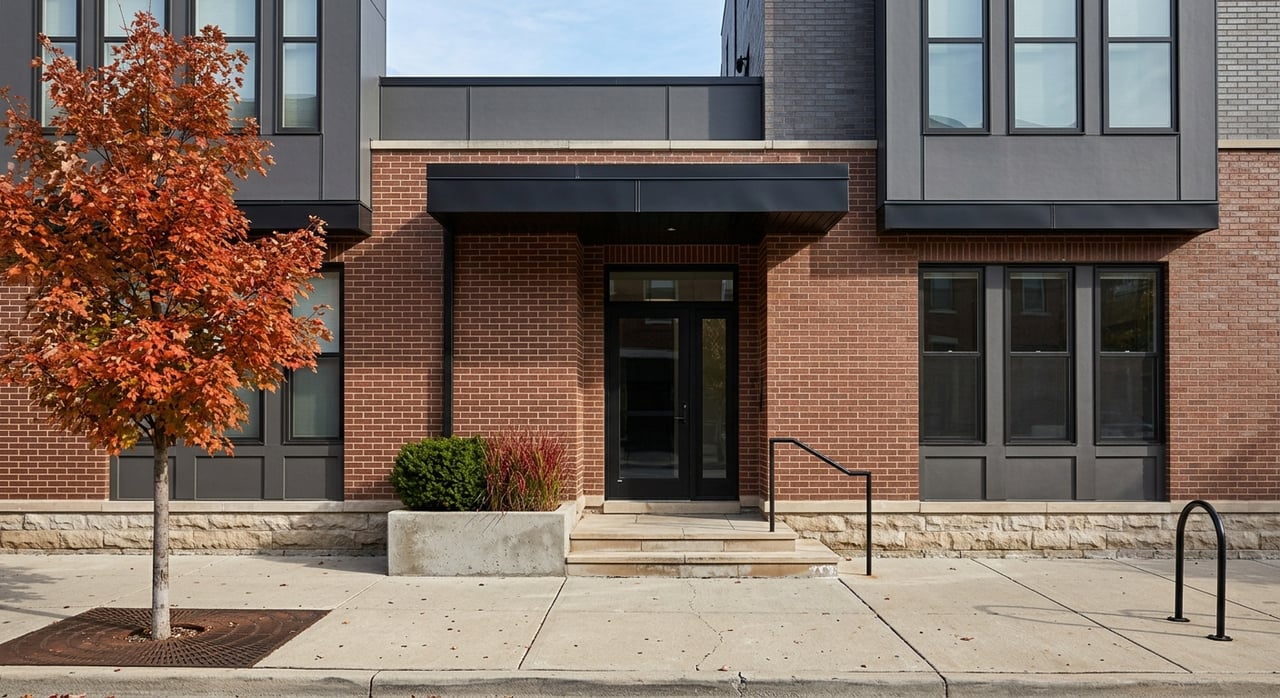
Downtown housing looks different from what you may find in many other parts of Kent County. City planning documents point to a mix of courtyard apartments, lofts, liner buildings, podium apartments, microlofts, and attached townhomes. Detached single-family homes are not the defining housing type here.
For you as a buyer or renter, that means the conversation usually centers on apartments, loft-style homes, condos, and townhome-style options in mixed-use or higher-density settings. If you are hoping for a large yard and a traditional suburban layout, downtown may not be the strongest fit. If you want an urban home base with amenities nearby, the housing mix may feel much more aligned.
What budget to expect
Downtown pricing can vary a lot depending on the building, finish level, and location. In the city’s 2025 housing assessment, Studio Park Tower & Lofts I & II was listed at $1,170 to $2,095 per month, while a planned Fulton Street and Market Avenue project had estimated rents of $2,643 for studios, $2,833 for one-bedrooms, and $3,401 for two-bedrooms. Those examples show how quickly newer downtown rentals can move from mid-range into premium pricing.
For buyers, the planning conversation points to more limited and more complex for-sale inventory than you may see in suburban neighborhoods. Condos and townhome-style homes are part of the mix, but they are not the dominant product in the same way detached homes are in many surrounding areas. That can make your search more specific and sometimes more competitive.
Who downtown Grand Rapids fits best
Downtown Grand Rapids tends to work best if you want a walkable, transit-capable, event-heavy lifestyle with easy access to dining, culture, and public spaces. It can be a strong fit for buyers and renters who value being near activity and are comfortable with apartments, lofts, condos, or townhome-style living. It is also worth a close look if you want to reduce your dependence on a car.
It may be a weaker fit if your priorities center on larger lots, detached homes, or a routine built around driving from place to place with minimal friction. The city’s own planning documents make that tradeoff clear. Downtown offers a dense amenity stack, but it also comes with urban realities like winter sidewalk responsibilities, retail gaps, and pricing pressure in newer buildings.
If you are trying to decide whether downtown matches your goals, the best next step is to compare your day-to-day routine with what the neighborhood actually offers. That kind of practical planning can help you avoid choosing a location that looks great on paper but does not support how you really live. If you want help weighing downtown Grand Rapids against other Grand Rapids area options, Leiter Home Group LLC is here to offer clear, local guidance and help you find the right fit.
FAQs
Is downtown Grand Rapids walkable for daily life?
- Yes. City planning documents describe downtown Grand Rapids as very walkable, though they also note that pedestrian safety, connectivity, and network gaps still need improvement.
Can you live in downtown Grand Rapids without a car?
- In many cases, yes. The free DASH pilot route, The Rapid’s Silver Line, bike and scooter options, and DART CarShare make a car-light lifestyle realistic for many residents.
What parks are available in downtown Grand Rapids?
- Downtown includes Ah-Nab-Awen Park along the Grand River and Rosa Parks Circle, both of which offer public space, walking areas, and event-related amenities.
What kinds of homes are common in downtown Grand Rapids?
- Downtown housing is typically made up of apartments, lofts, condos, microlofts, and townhome-style homes rather than detached single-family houses.
Is downtown Grand Rapids good for everyday errands?
- It depends on your routine. Downtown is very strong on dining, arts, and events, but city planning documents say grocery stores, pharmacies, and broader retail remain areas the city wants to improve.
What should renters expect to pay in downtown Grand Rapids?
- Recent city housing data shows a wide range, from about $1,170 to over $3,400 per month in newer downtown projects, depending on the building and unit type.