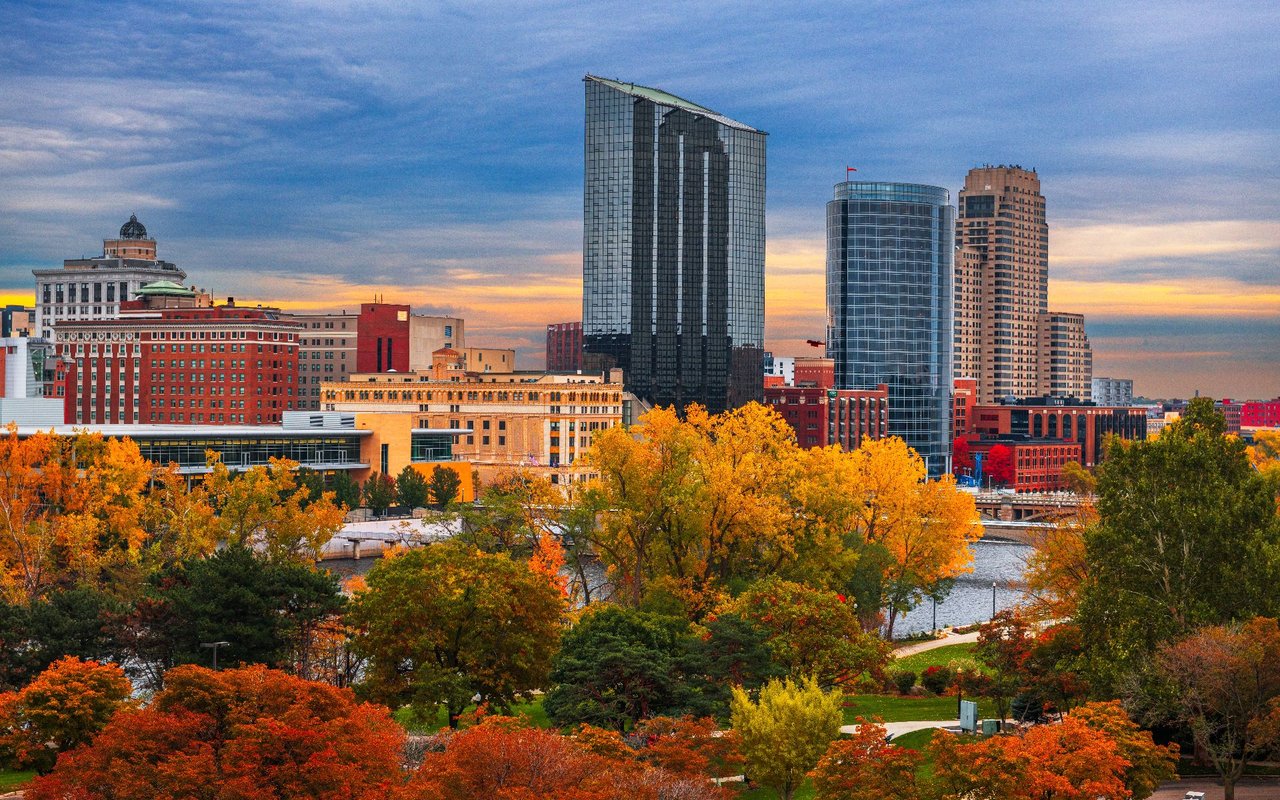
Grand Rapids, Michigan is the second-largest city in the state and the economic and cultural hub of West Michigan. Situated along the Grand River approximately 30 miles east of Lake Michigan, it has evolved from its furniture-manufacturing roots into a diversified modern city driven by healthcare, higher education, technology, and a nationally recognized food and craft beverage scene. Grand Rapids, MI real estate attracts buyers from across the country who are drawn to its combination of urban energy, outdoor access, and below-national-average cost of living.
Homes for sale in Grand Rapids, MI represent a broad spectrum of price points, architectural styles, and neighborhood characters — from the Victorian-era streetscapes of Heritage Hill to the new construction subdivisions of the surrounding suburbs. Whether you are a first-time buyer, a growing family, or a seasoned investor, the Grand Rapids market offers consistent opportunity backed by one of the Midwest’s most resilient local economies.
.
Grand Rapids strikes a balance between approachable Midwest practicality and a creative, forward-looking urban culture. The downtown core is genuinely walkable, with independent restaurants, craft breweries, galleries, and live music venues all within easy reach. Residential neighborhoods range from dense, character-rich urban blocks to spacious suburban streets. The city is ambitious without being rushed — residents take pride in local institutions, support independent businesses, and maintain a strong sense of civic identity.
Grand Rapids was formally incorporated in 1850 and built its early economy around lumber and, later, furniture manufacturing — earning the historic nickname “Furniture City.” That manufacturing base transformed significantly in the latter 20th century as healthcare systems expanded and educational institutions grew. Today, Grand Rapids is regularly recognized as one of the best mid-sized cities in America for livability, business climate, and quality of life. Significant downtown investment over the past two decades has revitalized the core, and the surrounding neighborhoods continue to attract new residents and development.
The Grand Rapids, MI real estate market is genuinely diverse in both property type and price point. The city’s older neighborhoods closer to downtown feature classic early 20th-century craftsman bungalows, Victorian-era homes, and brick colonials — many with original architectural details preserved or thoughtfully restored. Moving outward, mid-century ranches, Cape Cods, and split-levels are common in neighborhoods like Alger Heights, Creston, and Northview.
Suburban areas and surrounding municipalities — Wyoming, Kentwood, Grandville, and Byron Center — offer newer single-family construction with open floor plans, attached garages, and larger lots. Condominiums and townhomes are found throughout the metro, attracting first-time buyers, downsizers, and investors. Luxury homes and new-build estates are available in outlying communities and select redeveloped pockets near the urban core.
| Median Home Price | Approx. $275,000–$325,000 (city; market-dependent) |
| Entry-Level Range | $150,000–$225,000 (smaller ranches, bungalows, condos) |
| Mid-Range | $250,000–$400,000 (updated single-family, desirable neighborhoods) |
| Luxury / High-End Range | $500,000–$1M+ (Heritage Hill estates, custom builds, lakefront-adjacent) |
| Average Days on Market | Typically 10–30 days for well-priced listings |
| Price Per Square Foot | Approx. $130–$200+, varying by neighborhood and condition |
HOA communities are common in newer suburban developments and condominium complexes throughout the Grand Rapids metro. Fees typically range from $100 to $400+ per month depending on amenities and shared maintenance. Many established city neighborhoods have no HOA. Buyers should confirm on individual listings.
Urban neighborhoods feature smaller lots, typically 0.1 to 0.25 acres, consistent with the density of early 20th-century platting. Suburban and outlying areas offer lots from 0.25 to 0.75+ acres. Homes in established city neighborhoods were primarily built between 1900 and 1960; suburban construction spans the 1970s through present day, with active new-build communities continuing to expand.
Grand Rapids, MI real estate has experienced sustained appreciation over the past decade, driven by population growth, strong employment, and increasing interest from out-of-state buyers drawn to West Michigan’s affordability relative to coastal markets. The market avoided the extreme volatility seen in higher-priced metros during rate shifts, offering more stable footing for both buyers and long-term owners.
Inventory has remained below historical norms in recent years, creating competitive conditions across most price ranges. The supply of move-in ready homes for sale in Grand Rapids, MI is routinely outpaced by demand, particularly in the $200,000–$400,000 range where buyer competition is most concentrated.
Grand Rapids has generally favored sellers in recent years, particularly for well-presented homes in desirable neighborhoods. Properties priced correctly and in good condition tend to attract multiple offers and sell above list price. Buyers are advised to work with an experienced Grand Rapids, MI real estate agent who can identify opportunities early and move decisively.
Spring and early summer represent the peak listing season, with the highest volume of new inventory and buyer competition. Fall can offer a more measured pace with less competition, though inventory also tightens. The winter market is slower but motivated buyers can find opportunities with less competition.
Grand Rapids proper typically commands a slight premium over suburban neighbors Wyoming and Kentwood due to walkability, neighborhood character, and school choices in certain areas. However, suburban communities often offer newer construction at lower per-square-foot costs. East Grand Rapids and Ada represent the highest price points in the greater metro, with medians well above the city average.
Grand Rapids is increasingly bike-friendly, with an expanding network of on-street bike lanes and dedicated trails. The Grand River edges trail connects multiple parks, and regional trail systems extend into Kent County and toward the lakeshore. The city’s flat-to-rolling topography makes cycling accessible for a wide range of fitness levels.
Grand Rapids has earned the nickname “Beer City USA” and is recognized nationally as a craft brewing destination. Founders Brewing Co., Brewery Vivant, Mitten Brewing, Bell’s (Ann Arbor-rooted but beloved here), and dozens of additional breweries and taprooms are woven into the city’s social fabric. The brewing scene is a genuine community anchor and a major draw for new residents and visitors alike.
The Grand Rapids dining scene has matured considerably over the past decade. The Eastown, Fulton Street, and downtown corridors support a diverse mix of independent restaurants, farm-to-table concepts, international cuisine, and beloved neighborhood spots. From quick-service lunch to fine dining, the city punches well above its size when it comes to culinary variety and quality.
Grand Rapids sits at a major Midwest highway crossroads. Interstate 96 runs east-west connecting Grand Rapids to Detroit (approx. 2.5 hours) and the Lake Michigan shoreline. US-131 is the primary north-south artery through the city core. M-6 (West Michigan Pike) provides a southern beltway connecting western suburbs to the eastern corridor. Access to most major destinations within the metro is straightforward and relatively uncongested by large-city standards.
| Downtown Grand Rapids | 10–20 min from most inner-ring neighborhoods |
| Detroit, MI | Approx. 2.5 hours via I-96 East |
| Lansing, MI | Approx. 1 hour via I-96 East |
| Kalamazoo, MI | Approx. 50–60 minutes via US-131 South |
| Lake Michigan Shoreline (Holland/Saugatuck) | Approx. 30–45 minutes via I-196 |
The Rapid (Interurban Transit Partnership) operates the Grand Rapids metro’s bus transit network, including the Silver Line BRT (bus rapid transit) running north-south along Division Avenue — one of the most-used transit corridors in West Michigan. Additional routes serve the broader metro. While the area is predominantly car-dependent outside the downtown core, transit options are available for commuters and residents without vehicles.
Grand Rapids hosts one of the most active community event calendars of any mid-sized American city. ArtPrize — the world’s largest publicly voted art competition — transforms the downtown and surrounding venues every fall, drawing artists and visitors from around the world. LaughFest, the Grand Rapids International Wine, Beer & Food Festival, the Tulip Time Festival (Holland), and summer concert series round out a calendar that keeps the city socially engaged year-round.
The Grand Rapids Art Museum (GRAM), the Grand Rapids African American Museum & Archives, the Gerald R. Ford Presidential Museum, and a dense concentration of galleries and public art installations give the city a cultural infrastructure that rivals much larger metros. The local arts community is active, well-supported, and deeply integrated into daily community life.
The brewing scene is not just a tourist attraction — it is a genuine pillar of Grand Rapids community life. Brewery taprooms serve as neighborhood gathering spaces, and the city’s food culture has grown alongside it. Farmers markets, independent restaurants, and a growing farm-to-table movement reflect a community that takes local sourcing and food quality seriously.
Grand Rapids is exceptionally family-friendly. John Ball Zoo, Millennium Park’s beach, a strong parks system, youth sports leagues, and community programming through city recreation centers all support active family life. The city is broadly pet-friendly, with parks, trail access, and a growing number of dog-friendly establishments. Individual HOA policies should be confirmed where applicable.
Safety in Grand Rapids varies meaningfully by neighborhood, as is typical in any mid-sized American city. Some areas — particularly Heritage Hill, East Hills, Eastown, Alger Heights, and the suburban communities — have strong reputations for safety, community investment, and neighborhood cohesion. Other areas of the city have seen higher crime rates and are in various stages of revitalization. Buyers are encouraged to research specific neighborhoods carefully and consult with a knowledgeable Grand Rapids, MI realtor who can provide neighborhood-level context.
Neighborhood upkeep and community investment vary widely. Established residential neighborhoods tend to be well-maintained with active neighborhood associations. City-led revitalization initiatives and community development organizations have made measurable progress in multiple areas. Walkability is strongest in the downtown core, Eastown, East Hills, and Heritage Hill. The overall trajectory of the city’s investment in public infrastructure, safety, and community programming has been positive.
The median home price within the city of Grand Rapids typically falls in the $275,000–$325,000 range, though this varies by neighborhood, condition, and current market conditions. Entry-level homes and condos can be found below $200,000, while renovated or larger properties in desirable neighborhoods can approach or exceed $500,000. Suburban communities and East Grand Rapids carry higher medians.
Families frequently prioritize access to top school districts. East Grand Rapids and Forest Hills school district communities (Ada, Cascade) are among the most sought-after. Within the city, Alger Heights, Creston, and Midtown offer strong community feel and practical amenities. Heritage Hill and Eastown appeal to buyers who want urban walkability alongside family life.
Yes. Grand Rapids, MI real estate has delivered consistent long-term appreciation supported by a growing population, a diversified employment base, and strong rental demand from university and healthcare employees. The market’s relative affordability compared to coastal cities makes it an attractive option for both in-state and out-of-state investors.
Grand Rapids is approximately 30–45 minutes from the Lake Michigan shoreline, depending on your destination. Holland, South Haven, and Saugatuck are among the closest lakeside communities and are popular day-trip and weekend destinations for Grand Rapids residents.
The city is primarily served by Grand Rapids Public Schools (GRPS). Surrounding communities are served by their own highly regarded districts, including East Grand Rapids, Forest Hills, Northview, Grandville, Wyoming, Kentwood, and Byron Center. District assignment depends on the specific address; buyers should confirm school boundaries when evaluating homes.
Grand Rapids is nationally recognized for its craft brewing scene (earning the nickname Beer City USA), the ArtPrize international art competition, Frederik Meijer Gardens & Sculpture Park, and its proximity to Lake Michigan. It is also a major Midwest healthcare and higher education hub and is consistently ranked among the best mid-sized cities in the U.S. for quality of life.
Working with a Grand Rapids, MI realtor who has deep knowledge of specific neighborhoods, school districts, and the current competitive landscape is the most effective approach. A local Grand Rapids, MI real estate agent can identify off-market opportunities, provide accurate pricing guidance, and help buyers and sellers navigate a fast-moving market with confidence.
Whether you are actively searching for homes for sale in Grand Rapids, MI or just beginning to explore the local market, having the right guidance can make all the difference. Grand Rapids, MI real estate listings often move quickly, and working with an experienced local team helps ensure you stay informed and ready to act when the right opportunity appears.
The Leiter Home Group provides expert insight into Grand Rapids, MI real estate, helping buyers explore current listings, understand market trends, and navigate the city’s diverse neighborhoods. Whether you are scheduling a neighborhood tour, requesting a market report, or determining the value of your current property, Leiter Home Group offers the local expertise and personalized support needed to make confident real estate decisions.
377,980 people live in Grand Rapids, where the median age is 34.4 and the average individual income is $38,700.517. Data provided by the U.S. Census Bureau.
Total Population
Median Age
Population Density Population Density This is the number of people per square mile in a neighborhood.
Average individual Income
There's plenty to do around Grand Rapids, including shopping, dining, nightlife, parks, and more. Data provided by Walk Score and Yelp.
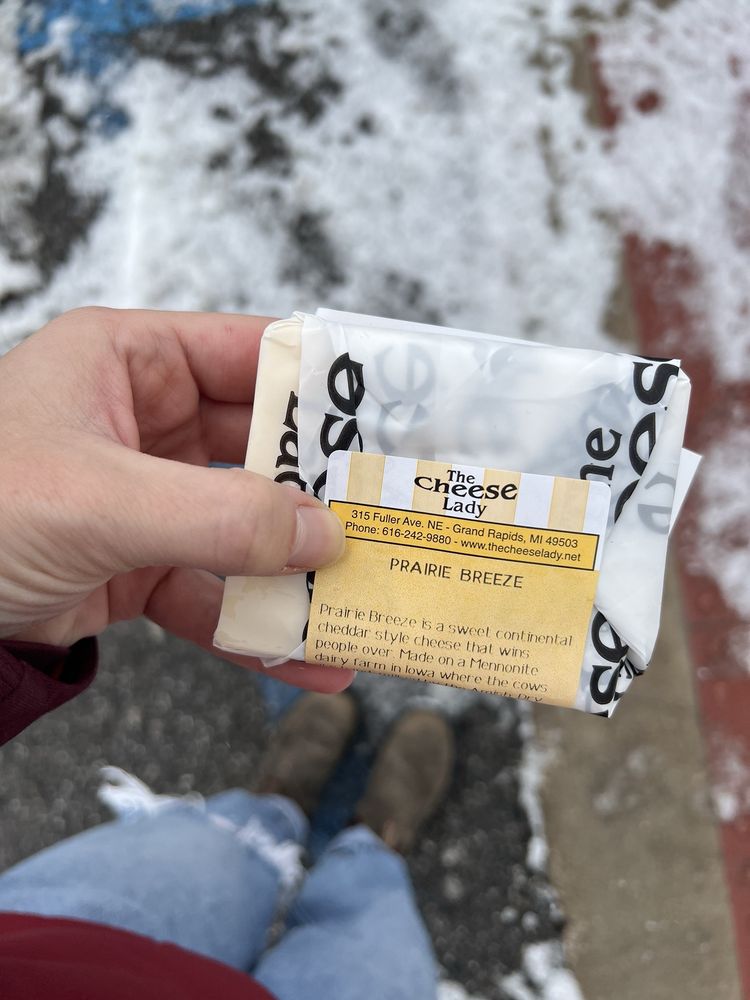
Explore popular things to do in the area, including Say Cheese GR, The Cheese Lady, and The Salted Cupcake.
| Name | Category | Distance | Reviews |
Ratings by
Yelp
|
|---|---|---|---|---|
| Dining | 0.64 miles | 6 reviews | 5/5 stars | |
| Dining · $$ | 1.11 miles | 59 reviews | 4.9/5 stars | |
| Dining · $ | 4.47 miles | 95 reviews | 4.6/5 stars | |
| Dining · $$ | 1.9 miles | 3 reviews | 5/5 stars | |
| Dining | 1.37 miles | 4 reviews | 4.8/5 stars | |
| Dining · $ | 2.55 miles | 9 reviews | 4.4/5 stars | |
| Active | 4.76 miles | 4 reviews | 5/5 stars | |
| Active | 4.3 miles | 3 reviews | 5/5 stars | |
| Active | 0.61 miles | 3 reviews | 5/5 stars | |
| Beauty | 1.16 miles | 4 reviews | 5/5 stars | |
| Beauty | 3.13 miles | 3 reviews | 5/5 stars | |
| Beauty | 3.52 miles | 3 reviews | 5/5 stars | |
| Beauty | 4.72 miles | 3 reviews | 5/5 stars | |
| Beauty | 0.33 miles | 3 reviews | 5/5 stars | |
|
|
||||
|
|
||||
|
|
||||
|
|
||||
|
|
||||
|
|
Grand Rapids has 150,052 households, with an average household size of 29.45. Data provided by the U.S. Census Bureau. Here’s what the people living in Grand Rapids do for work — and how long it takes them to get there. Data provided by the U.S. Census Bureau. 377,980 people call Grand Rapids home. The population density is 3,477.892 and the largest age group is Data provided by the U.S. Census Bureau.
Total Population
Population Density Population Density This is the number of people per square mile in a neighborhood.
Median Age
Men vs Women
Population by Age Group
0-9 Years
10-17 Years
18-24 Years
25-64 Years
65-74 Years
75+ Years
Education Level
Total Households
Average Household Size
Average individual Income
Households with Children
With Children:
Without Children:
Marital Status
Blue vs White Collar Workers
Blue Collar:
White Collar:
Ready to buy, sell, or explore VA home loan options in West Michigan? Contact Leiter Home Group today—our team is here to guide you with expertise, care, and dedication.